360 Degrees of Protection: A Layered Security Approach
Cybercrime is more than an IT problem—it’s a global economic threat. In 2024, cyberattacks cost businesses nearly $10 trillion, making them one of the biggest financial risks today. These attacks don’t just disrupt companies; they impact industries, supply chains, and national economies.
Yet many businesses still rely on outdated, fragmented security measures that leave them vulnerable. Hackers don’t need to break down the front door when they can slip in through a weak password, an unpatched system, or a single phishing email.
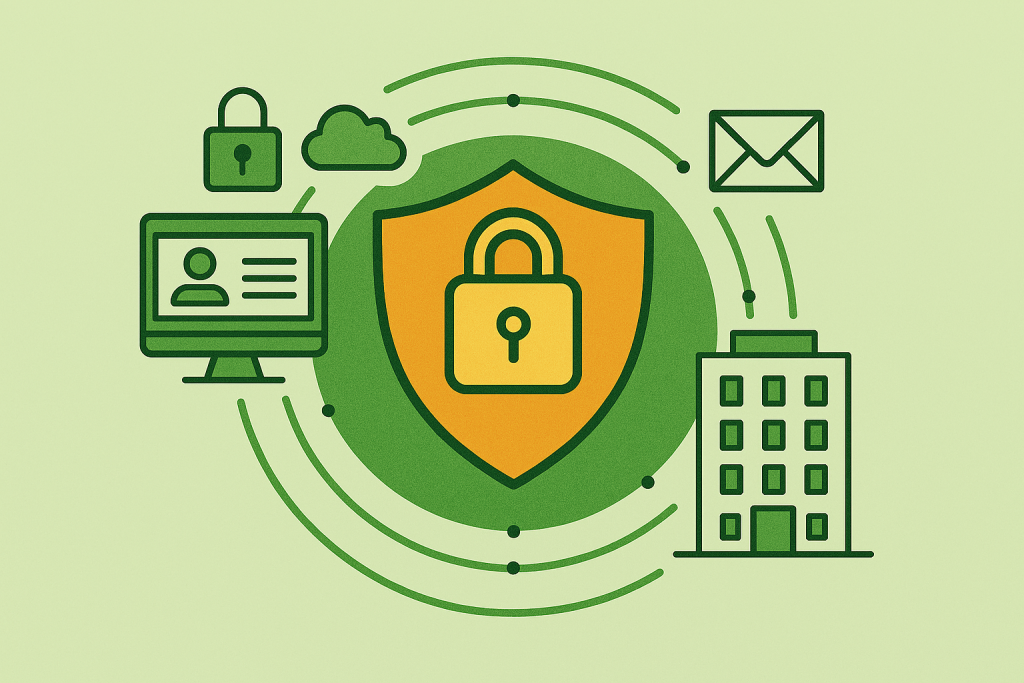
No single security tool is enough. A layered defense means if one line of protection fails, others are in place to stop the attack. From endpoint protection to network security and employee training, businesses must cover every angle to stay ahead of evolving threats.
Perimeter Security & First Lines of Defense
No business is too small or too prepared to be targeted, and attackers look for the easiest way in. The first step in a strong strategy is preventing threats from reaching critical systems in the first place.
Business-Grade Antivirus
Basic antivirus software isn’t enough to stop modern cyber threats. Business-grade antivirus software goes further by analyzing suspicious files in real time, using cloud-based intelligence to detect emerging threats and automatically blocking malicious activity.
Endpoint Security & 24/7 Response
Fileless malware and zero-day exploits are engineered to bypass static defenses, attacking workstations, laptops, servers, and mobile devices as a way to gain access to company networks. Modern endpoint detection and response (EDR) systems monitor device activity for suspicious behavior, block unauthorized processes, and isolate infected endpoints before damage spreads. Combined with managed detection and response (MDR), this means 24/7 monitoring by security experts who analyze threats in real time and take immediate action when needed.
Email Security & Phishing Protection
More than 90% of breaches start with a single email. Phishing attacks impersonate trusted contacts, tricking employees into downloading malware, clicking fraudulent links, or handing over credentials. Email security solutions filter out malicious messages, warn users about external senders, and encrypt sensitive data to prevent leaks, reducing human error as a security risk.
Threat Detection & Risk Management
The worst breaches happen when security gaps go unnoticed, allowing attackers to exploit weaknesses that could have been prevented.
Vulnerability Management
More than 60% of cyberattacks exploit known vulnerabilities—security flaws that already have patches available but haven’t been applied. Hackers actively scan networks for outdated software, misconfigured systems, and unprotected devices because they know businesses often struggle to keep up. Vulnerability management helps businesses stay ahead by continuously scanning systems for weaknesses and prioritizing critical updates. By identifying gaps before attackers do, businesses can close entry points and reduce their overall risk.
Dark Web Monitoring
The dark web is full of leaked usernames and passwords from past breaches, many of which go undetected for months. Employees who reuse passwords across accounts make it even easier for hackers to gain access. Dark web monitoring tools scan for compromised credentials and exposed company data, alerting businesses when their information appears in underground markets.
Identity & Network Security
Using weak passwords or poorly secured remote access, hackers can move laterally across networks and steal sensitive data.
Secure Access Service Edge (SASE) & VPN
With employees working from anywhere, company data is constantly accessed across public Wi-Fi, personal devices, and home networks. Traditional virtual private networks (VPNs) create an encrypted tunnel between a user’s device and company systems, preventing outsiders from spying on transmitted data. SASE goes further, combining networking and security into a single framework and enforcing policies before a user or device connects to corporate resources.
- Users and devices must authenticate before gaining access, reducing the risk of stolen credentials.
- Traffic is inspected and filtered in real time, blocking malicious activity before it reaches the network.
- Access is limited based on role, location, and risk level, so employees can only reach the systems they need.
Zero Trust Security
Many businesses still rely on outdated implicit trust models that assume anyone inside the network is safe. Zero trust frameworks require continuous authentication before granting access to any system. Instead of open access, employees, devices, and applications must prove their identity every time they attempt to connect.
Password Management
More than 80% of breaches involve weak or stolen passwords because many companies opt for convenience instead of long-term security. Password management solutions enforce strong, unique passwords across accounts while securely storing them in an encrypted vault, preventing attackers from using credential stuffing attacks to gain access.
Proactive People & Unified Security
Even the strongest cybersecurity tools can’t stop an attack if an employee unintentionally hands over their credentials or clicks a malicious link.
Employee Awareness
Simulated phishing tests and ongoing education turn employees into active defenders rather than weak links in the security chain. Security awareness training teaches employees how to:
- Recognize phishing attempts and suspicious links before clicking.
- Avoid social engineering scams that impersonate executives or vendors.
- Respond correctly to potential incidents to minimize damage.
Unified Threat Management
By centralizing security operations, businesses improve response times and create a stronger, more proactive defense. UTM platforms integrate multiple security tools into a single, real-time dashboard where IT teams can:
- Monitor security alerts across endpoints, emails, and networks.
- Detect and respond to threats faster by eliminating blind spots.
- Ensure compliance by maintaining visibility into all security measures in one place.
The Secure360 Approach
A strong security strategy takes the right tools and makes them work together. Secure360 by Big Fish Technology integrates every layer into one seamless, fully managed solution. Close the gaps in your defense and stay ahead of emerging threats by reaching out to Big Fish Technology.